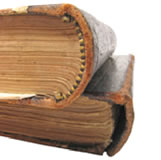
Together with directions for propagating and improving from real practice and experience, all sorts of timber trees. London. For the Author. 1759. No pagination, printed in double columns. (iv), A - 15 R, (i). Coloured frontis, 19 plates as called for. Folio. Full calf, later spine.. Some minor foxing and off setting. A tiny amount of worm, mainly one hole bottom corner margin. 7th edition. ESTC T59415. ODNB. 'Miller's outstanding work was The Gardeners Dictionary, produced in eight editions (1732–68) during his lifetime.. Up to the seventh edition (1756–9), Miller adopted the classification and generic nomenclature of J. P. de Tournefort's Institutiones (1700). Tournefort had genera of first rank defined by the form of flower alone: Rosa, Viola, and genera at second rank defined only by vegetative characters, such as Pinus, Abies, and Larix. Linnaeus accepted only genera of Tournefort's first rank: he rejected the second rank genera by including them within first rank genera in 1753, the internationally accepted starting point for modern botanical nomenclature. Miller's conservatism in retaining in 1754 Tournefort's second rank genera, suppressed by Linnaeus nomenclaturally, re-established these genera and he is accordingly cited as the authority for Abies, Larix and suchlike. Moreover, Linnaeus had changed many generic names to make them shorter and easier to remember, altering Anapodophyllum to Podophyllum, for example. Miller disagreed with this in 1752, 'being unwilling to introduce any new Names, where the old established names were suitable, lest, by this, he should rather puzzle, than interest, the Lovers of Gardens' (Miller, iv–v). He was likewise reluctant to accept Linnaean two-word names for species but, at the age of seventy-seven, he at last used them in the eighth edition of The Gardeners Dictionary (published in 1768) and gave names of his own to species not recorded by Linnaeus.'
Order Number: 36872
|
|